


Martyn’s Law: Preparing Schools for Lockdown
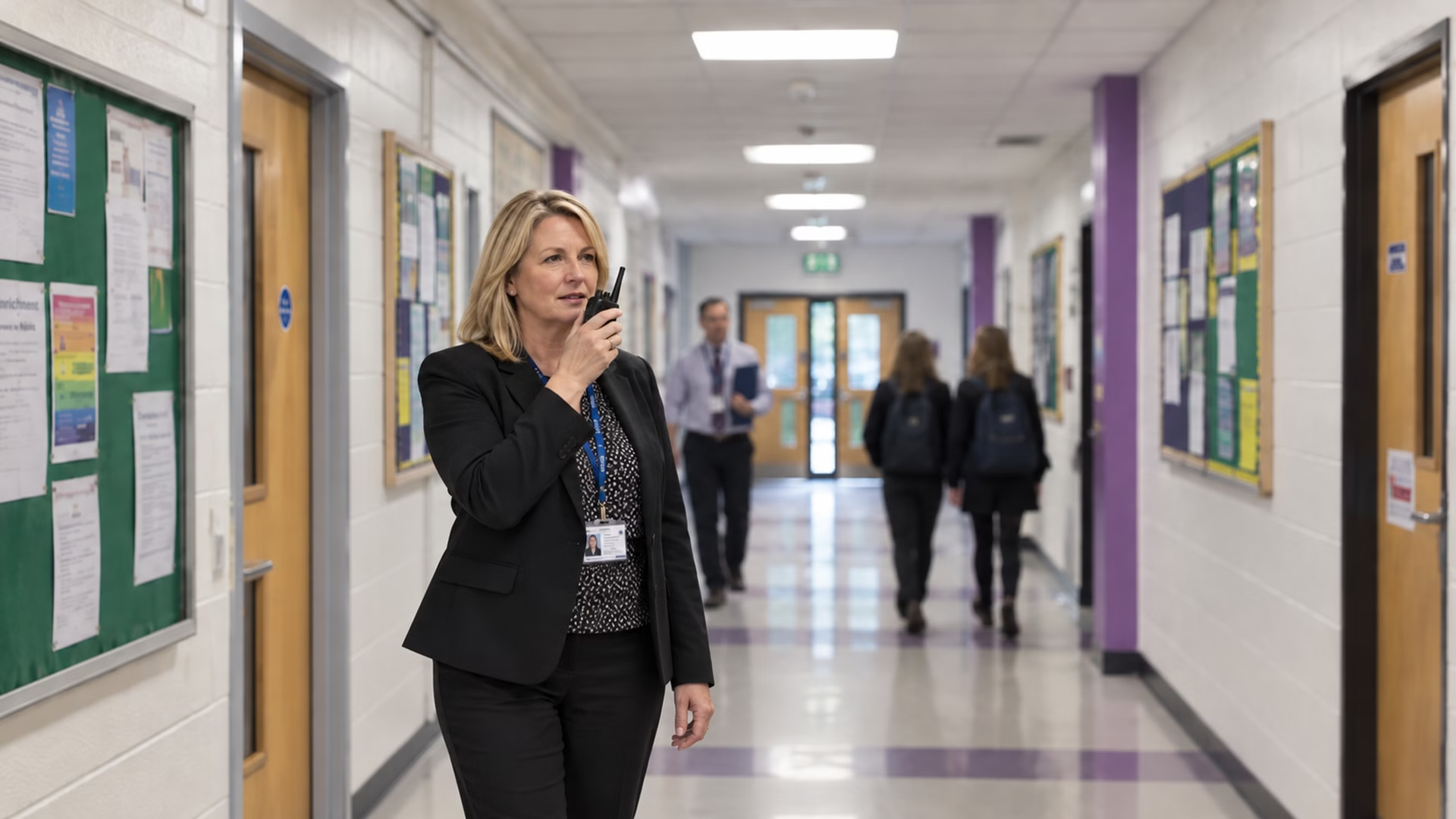
Martyn’s Law is placing greater focus on how schools and education settings prepare for serious incidents and how staff communicate when a response is needed.
For schools, preparedness is not simply about having an emergency plan in place.
Staff need to understand what happens if a lockdown is required, how they will be alerted and how key people will continue to communicate while the response is underway.
Lockdown is only one part of the picture.
Under Martyn’s Law, qualifying premises will need to have appropriate public protection procedures in place for:
- evacuation;
- invacuation;
- lockdown;
- communication.
These procedures need to work together in practice.
A well-planned school lockdown procedure is only effective if the right information can reach staff across classrooms, reception areas, playgrounds, sports facilities and separate buildings when it matters.
What does Martyn’s Law mean for schools?
Martyn’s Law is the commonly used name for the Terrorism (Protection of Premises) Act 2025.
For a school or education setting to fall within scope, one of the key considerations is whether it is reasonable to expect 200 or more people, including staff, to be present at the same time, from time to time.
This may apply during the normal school day in larger schools or during events such as open evenings, performances or sports fixtures.
For schools and colleges within the standard tier, the focus is on having appropriate and reasonably practicable procedures in place rather than introducing specific physical security measures or technologies.
You can find more information about the legislation and how it applies to education settings on our Martyn’s Law for schools page.
Evacuation, invacuation, lockdown and communication
Martyn’s Law identifies four public protection procedures that qualifying premises need to consider.
Evacuation
Moving people out of the premises to reduce the risk of harm.
Invacuation
Moving people to a safer place within the premises.
Lockdown
Securing all or part of a premises to help prevent people from entering or leaving.
Communication
Alerting people on the premises to danger and helping staff understand what action they need to take.
Different incidents may require different responses.
That means schools need to think beyond simply having a lockdown policy and consider how each procedure would actually work across their site.
What should a school lockdown procedure consider?
Every school site is different.
A primary school operating from one building will have very different communication requirements from a large secondary school or college spread across multiple blocks, sports facilities and outdoor areas.
A school lockdown procedure therefore needs to reflect how the site actually operates.
Questions worth considering include:
- Who can initiate a lockdown?
- How will staff know that it has been activated?
- Is the alert clearly different from a fire alarm or other emergency signal?
- What happens to staff and pupils who are outside?
- How will people in separate buildings be informed?
- How will reception, site staff and senior leaders stay in contact?
- How will important information reach the person coordinating the response?
- How will a change of instruction or all-clear be communicated?
Thinking through these scenarios can highlight gaps that may not be obvious when a procedure only exists on paper.
It can also help schools identify whether the communication systems they already use are suitable for an emergency situation or whether additional measures may be needed.
How will the initial alert reach everyone?
This is the first communication challenge.
If an incident occurs, staff across the site need to know that a procedure has been activated and what they are expected to do.
That communication may need to reach people in:
- classrooms;
- offices;
- reception areas;
- playgrounds;
- sports halls and playing fields;
- car parks;
- separate buildings.
Schools should consider whether their current method of raising an alert can reach the people who need it, wherever they may be on the site.
It is also worth considering whether an alert could be misunderstood.
A lockdown instruction, for example, needs to be clearly distinguishable from an instruction to evacuate.
But the initial alert is only part of the response.
How will key staff communicate afterwards?
Once an evacuation, invacuation or school lockdown procedure is underway, certain members of staff may still need to exchange information.
For example:
- Has an entrance been secured?
- Are pupils or staff still outside?
- Has the situation changed?
- Does a particular area need assistance?
- Has everyone received the instruction?
- Does the response need to change?
Trying to establish these communication routes once an incident is already underway can create unnecessary difficulty.
Schools should therefore consider in advance both:
How will the initial alert reach everyone who needs it?
and
How will the people managing the response continue to communicate afterwards?
Both are important parts of effective preparedness.
Where can walkie talkies fit in?
Martyn’s Law does not require schools to use walkie talkies or any particular communication technology.
The starting point should always be the procedure.
Who needs to communicate? Where are they likely to be? What information may they need to share? Who is coordinating the response? What happens if the normal communication method is unavailable?
Once those questions have been considered, schools are in a much better position to decide whether their existing systems are suitable.
For some settings, walkie talkies can provide a simple and direct communication route between designated members of staff across the site.
They can be particularly useful for people who are regularly moving between locations rather than sitting next to a desk phone or computer, including:
- senior leaders;
- reception teams;
- site managers and caretakers;
- pastoral staff;
- security personnel;
- playground and duty staff.
During an incident, radios can allow short operational updates to be shared quickly between the people coordinating the response.
They can also support day-to-day communication, making them part of a wider communication system rather than equipment that is only used during an emergency.
Schools considering their wider communications setup can find more information about our communications solutions for schools and education.
Four questions worth asking about your communication arrangements
1. Can key staff be reached wherever they are?
Communication needs to work in the areas where staff may actually be when an incident occurs.
That could include classrooms, playgrounds, sports fields, car parks, reception areas and separate buildings.
Where walkie talkies form part of the plan, schools should consider whether coverage is reliable across the areas where users are expected to work.
2. Is it clear who needs to communicate?
Not everyone needs to be part of every conversation.
Clear roles and escalation routes can help information reach the right people without creating unnecessary confusion.
Schools should consider who needs access to operational communication during an incident and who is responsible for coordinating updates.
3. Are instructions clearly understood?
Evacuation, invacuation and lockdown require different actions.
Staff need to understand what each instruction means and what they are expected to do.
Communication equipment can help deliver information, but it cannot compensate for unclear procedures or poorly understood terminology.
4. Has the procedure been tested?
A procedure that works on paper may work differently in practice.
Exercises can help identify unclear responsibilities, communication gaps or areas of the site where an alert or radio coverage does not perform as expected.
Testing also gives schools an opportunity to refine their arrangements before they are needed in a real incident.
Common communication gaps to look for
When reviewing a school lockdown procedure, it can be useful to look specifically for areas where communication could break down.
Common considerations include:
- staff working outside the main building;
- separate teaching blocks or temporary buildings;
- sports facilities some distance from reception;
- staff who are regularly mobile around the site;
- areas where mobile phone coverage is unreliable;
- situations where the person coordinating the response cannot reach a particular team.
The aim is not to add unnecessary complexity.
It is to understand how information needs to move around the site and whether the current system supports that in practice.
Martyn’s Law should prompt a wider review
Martyn’s Law gives schools and education settings an opportunity to look at emergency preparedness more broadly.
Evacuation, invacuation, lockdown and communication should not be considered in isolation.
The aim is to make sure there are practical procedures that reflect the site, that staff understand their responsibilities and that the communication methods supporting those procedures work where they are needed.
Start with the people, the site and the procedure.
Then consider what technology is needed to support it.
For some schools, existing systems may already provide what is needed. Others may identify gaps in coverage, communication between buildings or the ability to reach mobile staff.
The important point is that technology should support the procedure rather than define it.
Frequently asked questions
Does Martyn’s Law apply to all schools?
No. One of the key considerations is whether it is reasonable to expect 200 or more people, including staff, to be present at the same time, from time to time.
Schools and education settings that meet the relevant criteria will fall within the standard tier.
What should schools consider when reviewing their Martyn’s Law preparations?
Schools should start by reviewing how their existing procedures would work in practice.
That includes how staff would be alerted, how evacuation, invacuation or lockdown instructions would be communicated, how key people would stay in contact and whether communication methods work across the whole site.
Does Martyn’s Law require schools to have a lockdown procedure?
Qualifying premises need to consider appropriate public protection procedures covering evacuation, invacuation, lockdown and communication.
The exact arrangements should reflect the premises and be reasonably practicable for the setting.
Does Martyn’s Law require schools to use walkie talkies?
No. Martyn’s Law does not prescribe walkie talkies or any specific communication technology.
Walkie talkies are, however, useful where designated staff need a direct way to communicate across a school site.
What should schools review first?
Start with the existing procedure.
Consider who needs to be alerted, who needs to communicate during an incident, where those people are likely to be and how information will move between different parts of the site.
This can help identify whether existing communication systems are suitable or whether changes should be considered.
Preparing your school for lockdown
For schools reviewing their Martyn’s Law preparations, having a written procedure is only the starting point.
Staff need to understand what they are expected to do, alerts need to reach the right people and key members of staff need a reliable way to communicate once the response is underway.
Reviewing those arrangements now can help schools identify practical gaps in their existing procedures and communication systems.
Digitall Comms works with schools, colleges and education settings to provide communication solutions designed around the way their teams and sites operate.
Whether you are reviewing an existing radio system, looking at coverage across a larger site or considering how key staff can stay connected during an emergency, our team can help you understand the options available.
Find out more about Martyn’s Law for schools or explore our communications solutions for schools and education.